
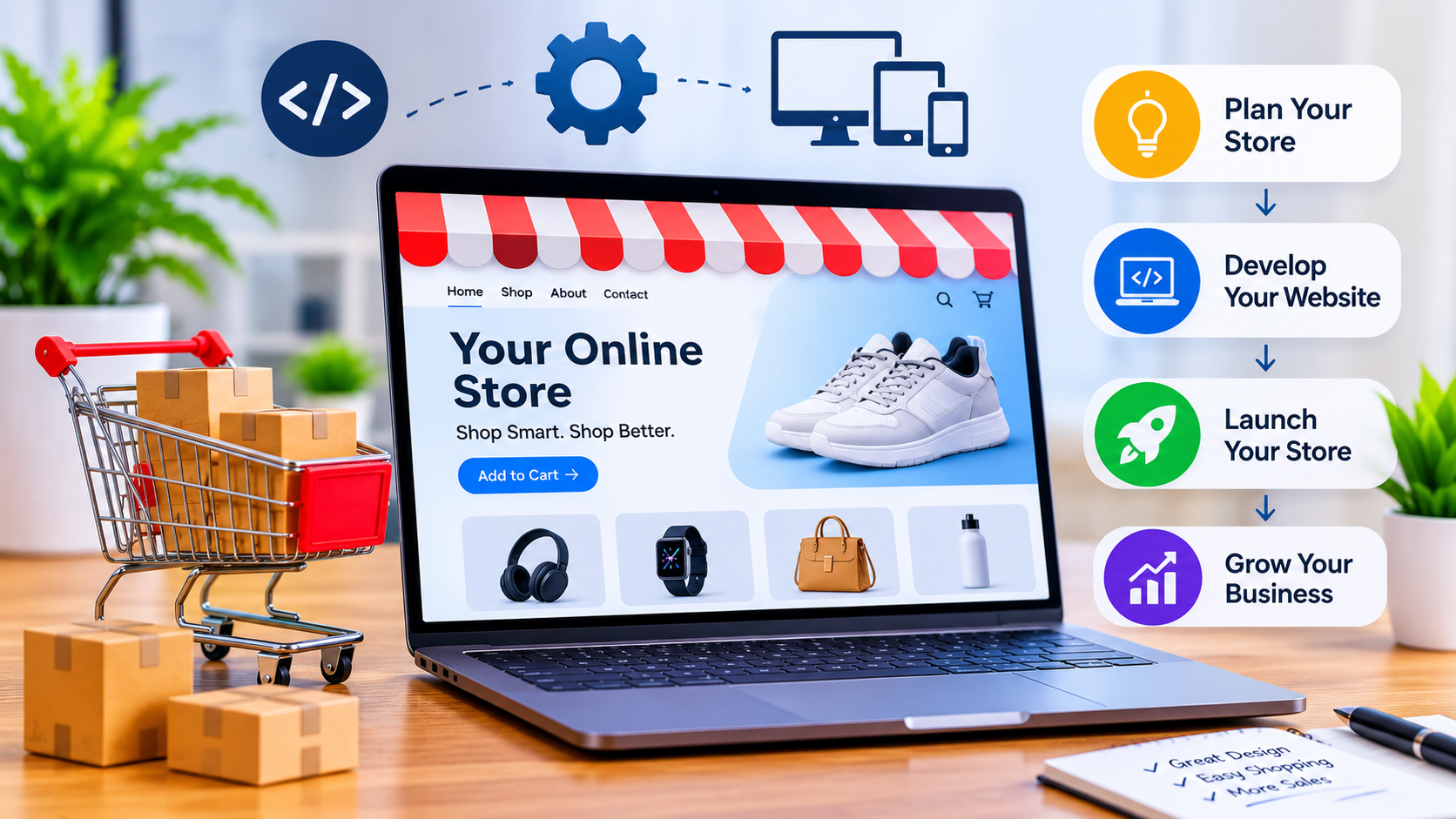
E-commerce website development helps businesses sell products online, accept payments, and manage customer orders through a dedicated online store. For businesses targeting customers in the USA, UK, Canada, Australia, UAE & Europe, well-planned stores can make shopping more convenient, improve product discovery, and support business growth.
Technuvia is a software and digital solutions company with offices in Dhaka, Bangladesh and Stamford, Connecticut, USA.
What Is E-commerce Website Development?
E-commerce website development is the process of planning, designing, building, and maintaining a website where customers can purchase products online. It includes product pages, shopping carts, checkout, payment integration, and order management. Businesses can choose platforms such as Shopify or WooCommerce, or build a custom solution based on their needs.
Who Needs an E-commerce Website?
An online store can help businesses expand beyond physical locations and improve how customers shop. Certain problems may indicate that an existing store needs improvement.
- Low e-commerce conversion rates: Visitors browse products but leave without buying. Unclear information, unexpected costs, or a difficult checkout may discourage them.
- Complicated checkout: Too many steps or unclear payment options can make completing a purchase frustrating.
- Difficult product and order management: Updating products, prices, and order statuses manually can become time-consuming as a business grows.
- Poor mobile experience: Customers may struggle to view products or complete purchases on smaller screens.
- Incomplete product information: Unclear descriptions, limited images, or confusing categories can make buying decisions harder.
Why Does Your Business Need an Online Store?
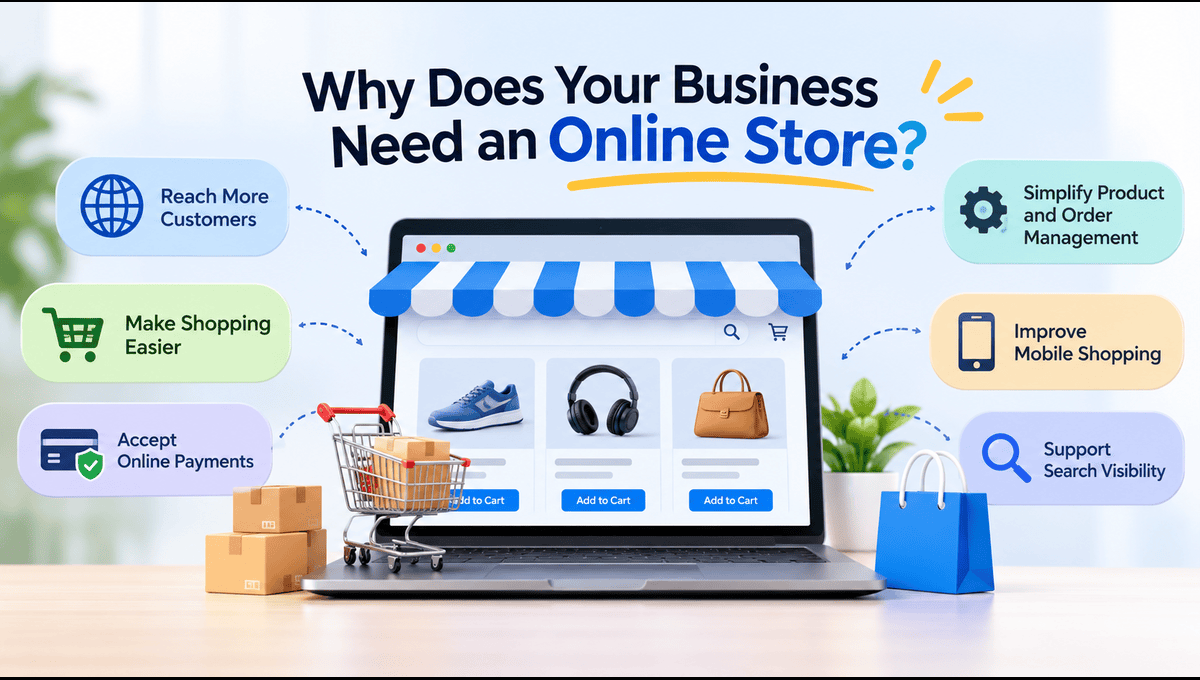
A well-built store gives customers a convenient way to explore products and place orders. It can also help businesses manage online sales more efficiently.
A well-built store gives customers a convenient way to explore products and place orders. It can also help businesses manage online sales more efficiently.
Reach More Customers
Customers can browse products without visiting a physical shop. With suitable delivery arrangements and payment options, businesses can serve customers in different locations.
Make Shopping Easier
Clear navigation, useful product descriptions, visible prices, and a straightforward checkout help customers understand what they are buying.
Accept Online Payments
Payment gateway integration connects a store with supported payment services. The right option depends on the business location, target market, provider fees, and available payment methods.
Simplify Product and Order Management
An organized store helps businesses maintain product information and track purchases. Available features depend on the platform and integrations.
Improve Mobile Shopping
A mobile-friendly design adapts to different screen sizes, making product pages, navigation, and checkout easier to use on phones and tablets.
Support Search Visibility
SEO-friendly product and category pages use descriptive titles, useful content, logical URLs, and a clear site structure. These elements help search engines understand the store.
What Do You Lose Without an Online Store?
Without an online store, customers who look for your products at night or from another city buy from a competitor who sells online. Common losses include:
- Lost sales after hours: Your shop closes, but customers keep searching. Every order they place somewhere else at night or on weekends is revenue you never see.
- Customers limited to your area: Without online ordering and delivery, you can only sell to people who can visit you, while online competitors sell to every city.
- Extra manual work: Orders taken by phone or message have to be written down, confirmed and tracked by hand, which takes staff time and mistakes creep in.
- Less customer trust: Buyers expect to see products, prices and secure payment online. A business without a store looks smaller than competitors who have one.
- Lost customer data: Without online orders, you don't build a list of who bought what, so it is harder to bring customers back with offers.
What Should an E-commerce Website Include?
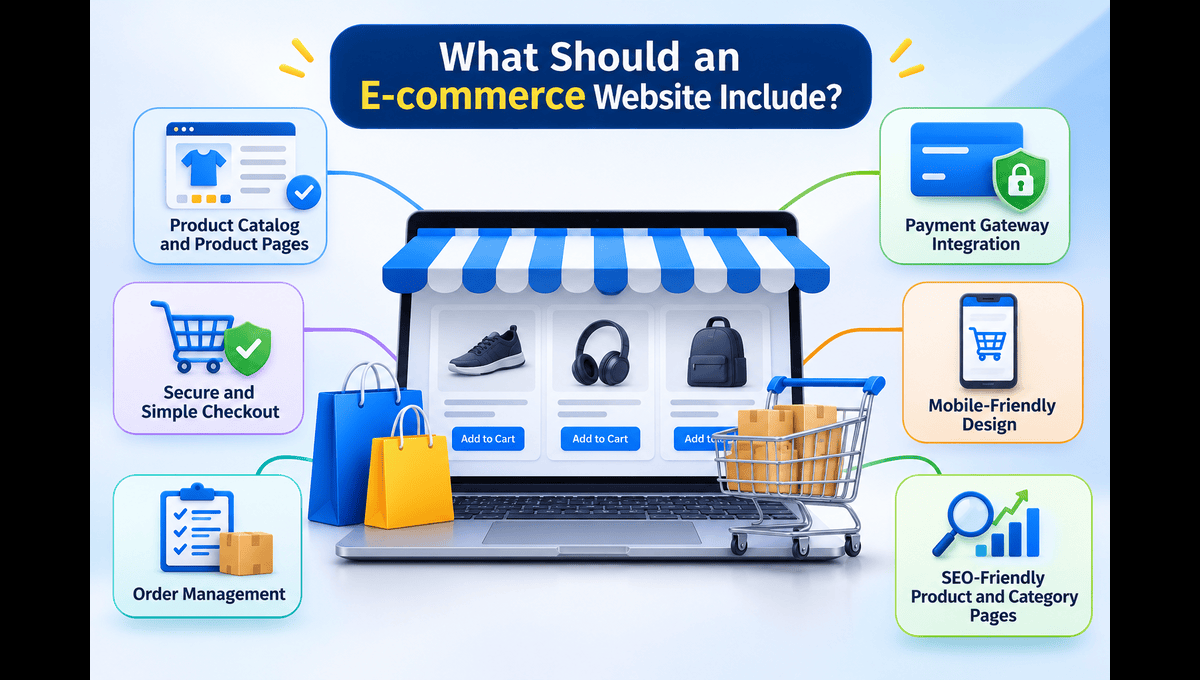
The required features depend on what you sell and how your business operates. Most online stores need the following essentials.
Product Catalog and Product Pages
Product catalog setup involves organizing products into useful categories and adding accurate prices, images, descriptions, and relevant details. A consistent structure helps customers compare products and find what they need.
Payment Gateway Integration
A payment gateway connects the store with a service that processes electronic payments. Check provider availability, fees, supported currencies, and platform compatibility before choosing one. Test the payment process before launch.
Secure and Simple Checkout
Checkout should clearly display order details, delivery costs, and payment options. Appropriate security measures help protect customer information. Avoid unnecessary steps while ensuring customers have the information needed to complete their purchases.
Mobile-Friendly Design
The layout should adapt to phones, tablets, and desktop screens. Test menus, product images, buttons, and checkout fields to identify usability problems before launch.
Order Management
Order management helps businesses organize purchases and track their progress. Depending on the platform, it may support order processing, status updates, and related store operations.
SEO-Friendly Product and Category Pages
Use descriptive titles, useful product information, logical URLs, and clear navigation. Appropriate image descriptions and well-organized categories can improve usability and help search engines understand the content.
How Technuvia Builds an E-commerce Website
Technuvia's E-commerce Website service describes a process that moves from understanding business requirements to design, development, review, and launch.
The process includes:
- Discovery: Discuss the business, products, target customers, and website requirements.
- Content collection: Gather product information, images, brand assets, and other necessary materials.
- Design and development: Build the store around the agreed requirements and selected solution.
- Review: Check the design and functionality and provide feedback.
- Testing and launch: Test key features before making the website available to customers.
Technuvia offers Shopify, WooCommerce, and custom website options. Businesses serving customers in the USA, UK, Canada, Australia, UAE & Europe should also consider local payment availability, currencies, delivery arrangements, and relevant legal requirements when planning their stores.
Before development begins, confirm the project scope, integrations, responsibilities, maintenance arrangements, and expected costs. This helps establish clear expectations.
Why Consider Technuvia?
Technuvia's e-commerce service covers product catalog setup, payment gateway integration, responsive design, secure checkout, order management, and SEO-ready website structure.
When evaluating a development provider, review its relevant experience, communication process, technical approach, and ability to explain how its solution fits your business needs.
Shopify vs WooCommerce vs Custom E-commerce Website
The right option depends on your budget, technical requirements, and plans for growth.
Template-based stores can be practical for straightforward requirements. Custom development may be more suitable when standard features cannot support important business processes. Compare the total cost and capabilities before deciding.
When choosing a development company, ask about project scope, security, testing, maintenance, expected costs, and the experience relevant to your requirements.
Frequently Asked Questions
How Much Does E-commerce Website Development Cost?
E-commerce website development costs depend on the platform, design, number of products, payment integrations, and custom features your business needs. Before starting, request an itemized estimate that includes development, platform fees, integrations, and ongoing maintenance.
Which E-commerce Platform Is Best?
The best e-commerce platform depends on your budget, technical requirements, and business goals. Shopify offers a hosted solution, WooCommerce works with WordPress, and custom development provides greater flexibility for specialized requirements.
What Features Does an Online Store Need?
Most online stores need product pages, a shopping cart, secure checkout, payment integration, mobile-friendly design, and order management. Depending on your business, you may also need inventory tools, shipping integrations, customer accounts, and promotional features.
What Is Payment Gateway Integration?
Payment gateway integration connects your online store to a payment service so customers can make electronic payments through supported methods. Before choosing a provider, check its fees, supported currencies, availability in your target markets, and compatibility with your e-commerce platform.
What Is E-commerce Order Management?
E-commerce order management involves organizing customer purchases and tracking them from order placement through fulfillment. Depending on the platform, it can help businesses manage order statuses, coordinate processing, and keep store operations organized.
Is an E-commerce Website Worth It for a Small Business?
An e-commerce website can help a small business sell products online, reach customers beyond its physical location, and make purchasing more convenient. However, consider development costs, customer demand, delivery arrangements, payment fees, and marketing expenses before investing.
Ready to Build Your E-commerce Website?
A useful online store starts with clear business requirements, organized product information, convenient checkout, and reliable ongoing maintenance.
“Explore Technuvia's E-commerce Website service to see the available options, or contact the Technuvia team to discuss which approach fits your business goals”.